
Abstract
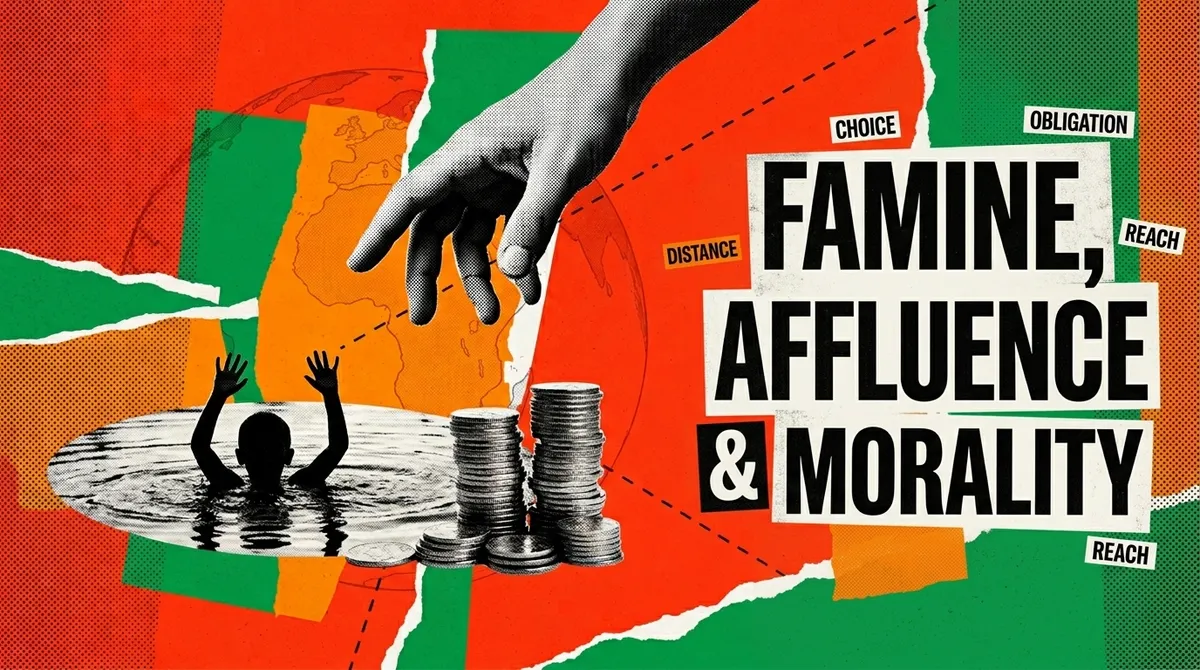
Do we have any moral obligation towards strangers who are dying from preventable diseases? This is one of the most thought-provoking ideas in moral philosophy. Peter Singer, in his 1972 paper “Famine, Affluence and Morality” argues that if it is in our power to prevent something bad from happening, without thereby sacrificing anything of comparable moral importance, we ought, morally, to do it. Here he uses a thought experiment where a child is drowning and not saving the kid is considered an immoral act. On the contrary, in other parts of the world children are dying from preventable diseases. By donating some money we can save the kid but we don’t feel the same moral obligation towards that. Singer compares not giving charity to save children’s lives is equivalent to walking past a drowning child and letting him die. This paper examines Singer’s core argument, the philosophical and psychological objections raised against it, and Travis Timmerman’s variant of the Drowning Child thought experiment, where he tries to show the flaws of Singer’s thought experiment saying this is not an accurate depiction of reality.
Introduction
Imagine someone asked you a very simple question: are you a morally good person? Most of us would answer yes, or at least we try to be a morally good person. We don’t kill or hurt other people, we try to follow all the rules and regulations, and we care for our family and friends. But what if being a “good person” requires more than just these basic actions? What if our everyday nonessential spendings, such as a new pair of shoes, a new smartphone, a new car or dinner at a restaurant are themselves morally problematic? This is exactly the unsettling territory that moral philosophy forces us to enter. Peter Singer argues that living an ethical life requires more than just following the “thou shalt not”. To become a moral person also, we have to donate and help other people as well.
This paper explores one of the most debated arguments in contemporary ethics: Peter Singer’s drowning child thought experiment. The goal is not to make anyone feel guilty but to examine the arguments presented by Singer and to find out its philosophical strengths and its flaws. In addition, the most important question; are we doing enough? And if not, how much is enough?
The Drowning Child
This thought experiment was first proposed in one of the most cited philosophy papers, “Famine, Affluence and Morality”[1] by Peter Singer. How it goes: let’s assume a hypothetical situation where you are walking in a park. In that park you see a kid splashing in a small pond. You see the child is drowning, and there are no other people who can help the child. Only you can save the kid, but the problem is you are wearing a very expensive pair of shoes which you bought a few days earlier and which cost you $50. If you want to save the kid, your shoes are going to be ruined. In these circumstances, if you don’t save the kid, thinking “This is not my kid or I didn’t throw the kid into the pond so why am I responsible?”, most of the people will say that you are a ‘monster’; you are such an evil person. You have done something totally immoral. Because a life is worth more than a $50 pair of shoes.
But on the other hand, we can save so many children’s lives by donating the same amount of money to charity. An estimated 4.9 million children died before their fifth birthday in 2024. Most of these deaths are preventable with proven, low-cost interventions. Their death reasons are infectious diseases like pneumonia, diarrhoea, malaria, malnutrition, preterm birth complications, and lack of basic healthcare access.[2] Which means each day 13,400 children are dying just because they lack enough money, proper health care and other privileges that we have!
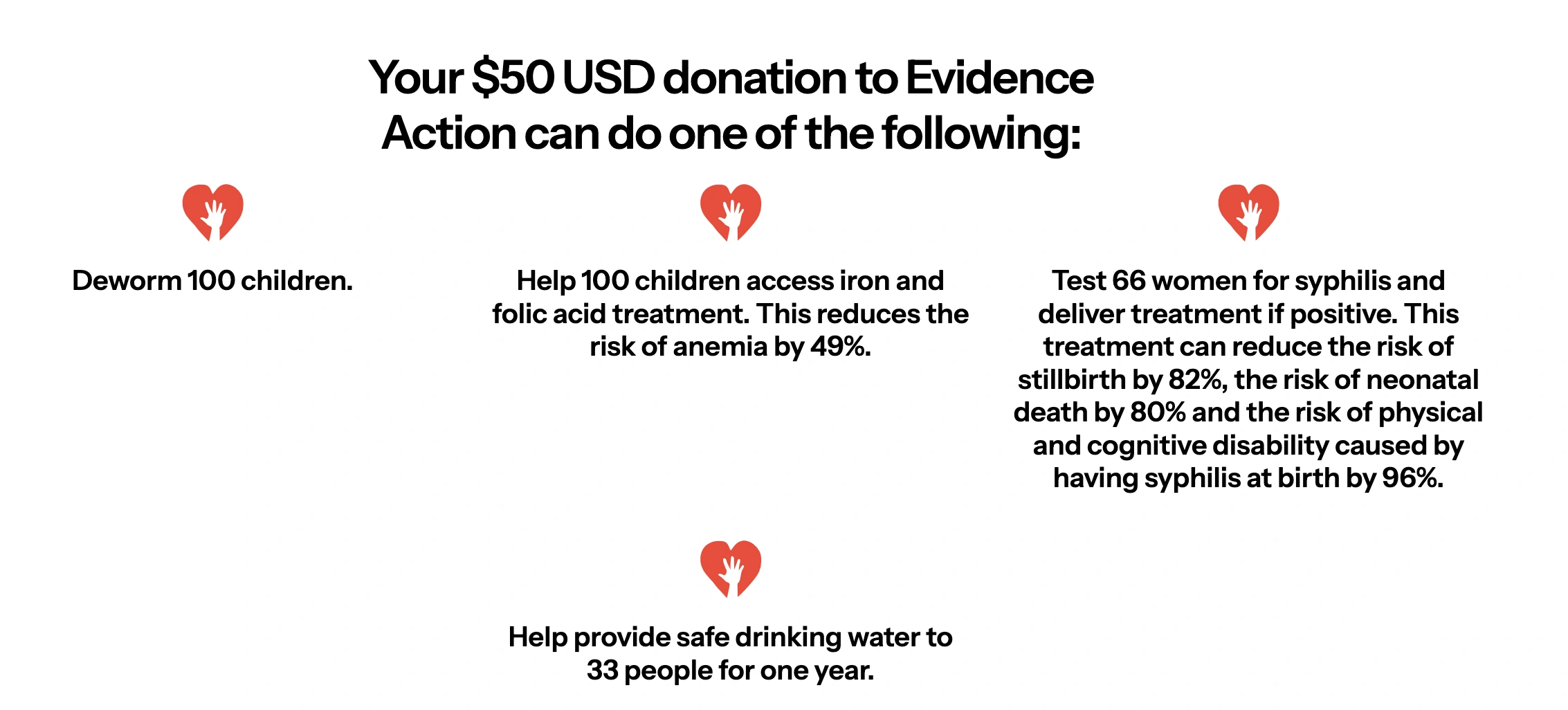
There is a calculator where you can see by donating how much money you can expect how much impact it can make in various organizations.[3]
The Paradox and Why Don’t We Act? The Psychological Objections
Here is the paradox: if the drowning children situation happens in front of us, obviously we will save the child. All over the world, each day almost 13,400 children die, and most of them are preventable. Suppose there is a kid in Africa fighting with malaria. Your same $50, which you sacrificed to save the kid from drowning, can save his life, but why don’t we do the same thing for that child?
One of the main reasons people don’t because, by donating they can’t see the changes in front of them. Suppose, if I help the drowning kid, then I am going to see what impact I have made, but when it comes to donating, we can’t see the changes exactly.
But this is not logical because let’s assume another situation. There is a box and inside that box a person is being tortured. What you have to do is just press a button and you can save the person. Now if the box is placed in another parts of the world and still by pressing the button you can save the person. Here is the question: Does increasing the distance, or us not being able to “see the impact”, make us less obliged to press the button? No, because distance and “not seeing the impact” shouldn’t make it less obligatory. In front of us or not; this shouldn’t dictate our morality. You can still save the person. In Peter Singer’s words:
It makes no moral difference whether the person I can help is a neighbor’s child ten yards from me or a Bengali whose name I shall never know, ten thousand miles away.
Psychologists actually have a name for this. It’s called the Identifiable Victim Effect and it’s a cognitive bias. The identifiable victim effect is the tendency of individuals to offer greater aid when a specific, identifiable person (“victim”) is observed under hardship, as compared to a large, vaguely defined group with the same need.[4] When someone shows a photo of one specific child with a name, story and specific information, people are more inclined to donate. But when they show statistics about millions of children dying, people don’t feel the exact same emotion when they have about the identified victim so they donate less. This is irrational when we think about it. The moral weight of a life doesn’t decrease just because it’s one of many. A child dying of malaria in Africa is just as real as the child drowning in front of you, even if our brain doesn’t process it the same way.
Another reason might be people can’t trust the organisations they are donating to. But this argument is not entirely valid because now there are so many trustworthy charity organisations where people can donate their money. There are many sites; they measured the effectiveness of each organisation.[5]
Singer’s Moral Argument
Singer further argues that giving money in charity is praised, but if a person doesn’t donate, this isn’t considered something to be condemned. Instead of donating when they buy new clothes or a new car, they don’t feel ashamed or guilty. He says that instead of buying some new clothes just to look “well-dressed”, we should spend that money to save others. He says giving away this money is not charitable or generous; we ought to do this.
‘If it is in our power to prevent something bad from happening, without thereby sacrificing anything of comparable moral importance, we ought, morally, to do it […] we ought to give the money away, and it is wrong not to do so.’
In short, Peter Singer formulates his argument as follows.
Premise 1: Suffering and death from lack of food, shelter and medical care are bad.
Premise 2: If it is in your power to prevent something bad from happening, without sacrificing anything nearly as important, it is wrong not to do so.
Premise 3: By donating to aid agencies, you can prevent suffering and death from lack of food, shelter and medical care, without sacrificing anything nearly as important.
Conclusion: Therefore, if you do not donate to aid agencies, you are doing something wrong
Killing vs. Letting Die: Is There a Difference?
One of the most common objections to Singer’s argument is this: there is a moral difference between killing someone and letting someone die. If I push a child into a pond, I have killed the child. That is unequivocally wrong, but if I simply walk past a drowning child and do nothing, I have only let the child die. Many people feel intuitively that these are not the same thing. And similarly, not donating to charity is just letting children die, not actively killing them. So why should I be held equally responsible?
This sounds reasonable at first. But think about it more carefully. Assume that you are a lifeguard and a child is drowning in front of you. You are the person who is designated to save those who are drowning. But today you are feeling exhausted, so you didn’t save the kid. Here is the question: Have you done something morally wrong? Yes, obviously. Because you could have saved the kid, which you didn’t. Even though you didn’t throw the child into the pond, still you are responsible.
Singer would say that killing vs letting someone die are distinct, but that doesn’t carry any actual moral weight on its own. What matters is whether you could have saved the drowning or not. If that causes you more harm than the child’s suffering, then you are not obliged to save him. If the answer is no, then you ought to save the kid. You could have saved the child, but you didn’t, so it means you have let one child die.
The Demandingness Objection
There is a problem: if Singer’s argument is true, then the money which I am spending for my haircut just to look good, hanging out with friends or any other nonessential things- all of them are morally bad! I should instead donate that money to charity. Then I shouldn’t possess any valuable nonessential things. We should stop all our extravagances like buying new clothes which we don’t need or going to a movie. Because his principle is the following:
You should give until giving more would harm you as much as it helps others.
People call this the Demandingness Objection which is an argument raised against utilitarianism and consequentialist theories. The demandingness objection argues that moral theories like utilitarianism are too demanding because they require individuals to constantly maximize the overall good, often requiring extreme sacrifices of personal time, money, and other resources.[6]
Sure, demand has nothing to do with the truth of the argument. Even if something is too demanding, that can be valid. Now go back to the drowning child. Here it takes only $50 to save the child. What if it costs both your smartphone and your shoes? Most of us are still going to save the child. Surely, a life is more precious than the value of a smartphone and a pair of shoes. But what if it takes all of our possessions? We are less obliged to save the kid? Maybe, because this is demanding too much, but still it doesn’t mean that we shouldn’t save the kid.
Timmerman’s Counter-Argument
There is another paper titled “Sometimes there is nothing wrong with letting a child drown”[7] by Travis Timmerman. This title sounds grim and immoral, but he tries to show that the second premise of Peter Singer’s argument is false. He thinks the drowning child analogy given by Peter Singer is not appropriate because in real life there is not only one kid to save. He suggests a new version of that.
Suppose your bank account is hacked by a group of hackers. Every five minutes they are taking $200 from the account. If your account is overdrawn, the bank will seize as much of your assets as is needed to pay the debt created by the hackers. Now the bank called you, and for some technical reasons you have to visit the bank in order to fix this problem. Luckily the bank is very close to you. It would take you less than five minutes. On the way to the bank you notice a vast space of land covered with hundreds of newly formed shallow ponds, each of which contains a small child who will drown unless someone pulls them to safety. Now here is the question: for how long have you kept saving children? It would require you to give up your house, your car, your books, your art and anything else not nearly as important as a child’s life. So, how long?; until all of your money is hacked or until all of your possessions are seized?
It is sure that you should at least spend time there to save some children’s lives. But how many remains a question. Should you give all of your possessions? Obviously not. At some point you should go to the bank so that the hacker won’t be able to take any more money from your account. Because there are endless children drowning, you should at least save some children and then go to the bank. The number is not definitive.
Another common argument is that I am not the only person to save. But even if there are other people to save, we still have the moral responsibility if we have the ability to help. Furthermore, we are not certain that other people will save or not. So, it’s my duty to do so. In addition to that, there are endless people who are suffering, so if we do not help those people, then eventually they are going to die.
So How Much Are We Actually Obligated to Give?
This is where it gets genuinely very complicated. Singer’s argument, taken to its logical conclusion, is radical. It essentially says you should keep giving until giving more would harm you as much as it helps others. Most people, including most philosophers, find this too extreme. But Timmerman’s response gives a better solution but which also raises the question of how much to donate.
Perhaps the most honest answer is somewhere in the middle. We shouldn’t do extreme on either side; not donating all of our possessions nor giving almost nothing. We are not obligated to give everything. It doesn’t mean we have no burden just because we didn’t push the child in. If we have all the necessary things and still we are spending so much on nonessential things then some portion of that surplus carries a moral weight.
The philosopher Peter Unger suggested that decent people ought, at the very least, to give away most of their financially valuable assets and much of their income in order to lessen the suffering of others through organizations like UNICEF and other aid agencies.[8] That is a demanding standard. On the other hand, organisations like Giving What We Can have built entire communities around this idea, asking members to pledge at least ten percent of their income to effective charities. [9] So the best option is starting with 1% of income and then gradually trying to increase the percentage of donation.
Conclusion
The drowning child thought experiment is so powerful because it makes something abstract feel uncomfortable. Of course most of you would save the child. Of course a life is worth more than a pair of shoes. But we spend every day on some nonessential goods which could save a child’s life other parts of the world.
Singer’s argument is not comfortable. It was never meant to be. But discomfort is not the same as being wrong. Timmerman is right that we cannot be expected to sacrifice everything, and that Singer’s version of the scenario is somewhat unrealistic. But none of that removes the basic obligation entirely that we should help as much as possible. Perhaps the real takeaway is not a precise number or a strict rule. It’s about how much effort we are giving to make the world a better place.
References
Singer, Peter (Spring 1972). “Famine, Affluence, and Morality”. Philosophy & Public Affairs. 1 (3): 229–243. JSTOR 2265052 ↩︎
World Health Organization. “Progress in Reducing Child Deaths Slows as 4.9 Million Children Die Before Age Five.” March 18, 2026. https://www.who.int/news/item/18-03-2026-progress-in-reducing-child-deaths-slows-as-4.9-million-children-die-before-age-five ↩︎
- Jenni, Karen; Loewenstein, George (1997-05-01). “Explaining the Identifiable Victim Effect” (PDF). Journal of Risk and Uncertainty. 14 (3): 235–257. doi:10.1023/A:1007740225484. ISSN 0895-5646. S2CID 8498645.
https://www.givingwhatwecan.org/best-charities-to-donate-to-2026, https://www.givewell.org/charities/top-charities, https://www.thelifeyoucansave.org/best-charities/ ↩︎
MacAskill, W., Meissner, D., and Chappell, R.Y. (2023). The Demandingness Objection. In R.Y. Chappell, D. Meissner, and W. MacAskill (eds.), An Introduction to Utilitarianism, https://www.utilitarianism.net/objections-to-utilitarianism/demandingness, accessed 4/13/2026. ↩︎
Timmerman, T. (2015). Sometimes there is nothing wrong with letting a child drown. Analysis, 75(2), 204–212. https://doi.org/10.1093/analys/anv015 ↩︎
Unger, Peter, ‘Living High and Letting Die: A Puzzle About Behavior Toward People in Great Need’, Living High and Letting Die: Our Illusion of Innocence (New York, 1996; online edn, Oxford Academic, 1 Nov. 2003), https://doi.org/10.1093/0195108590.003.0002, accessed 12 Apr. 2026. ↩︎
Giving What We Can. “Pledge.” 2026. https://www.givingwhatwecan.org/pledge. ↩︎